Εμφάνιση αναρτήσεων με ετικέτα July. Εμφάνιση όλων των αναρτήσεων

Τετάρτη 24 Ιουλίου 2024

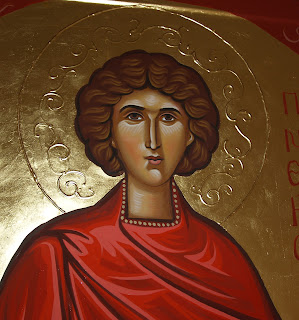
Αγία Μίλιτσα της Σερβίας - Holy Right-believing Princess Militsa of Serbia


15x22 cm

5.9x8.6 inch. 

Egg tempera on linden wood.

2024.


Η Μίλιτσα Χρεμπελιάνοβιτς (σερβικά : Милица Хребељановић) (περίπου το 1335 - 11 Νοεμβρίου 1405) ήταν πριγκίπισσα της Σερβίας η σύζυγος του Σέρβου πρίγκιπα Λάζαρ και αγία της Σερβικής ορθόδοξης εκκλησίας.

Καταγόταν από την βασιλική οικογένεια των Νεμάνια. Ο πατέρας της ήταν ο πρίγκιπας Βράτκο, γιος του Βουκάν. Η Μίλιτσα γεννήθηκε περίπου το 1335 και το 1353 παντρεύτηκε τον Λάζαρο Χρεμπελιάνοβιτς. Μετά το τέλος του η Μίλιτσα έγινε ηγεμόνας της Σερβίας του Μοράβα με πρωτεύουσα την Κρούσεβατς. Είχαν αποκτήσει επτά παιδιά.

Όταν ο σύζυγός της το 1389 σκοτώθηκε στη Μάχη του Κοσσυφοπεδίου, η Μίλιτσα ανέλαβε το θρόνο, επειδή οι γιοι της ήταν ακόμη παιδιά. Όταν ο μεγαλύτερος γιος της Στέφαν μεγάλωσε, τού έδωσε την εξουσία. Στη συνέχεια πήγε στη μονή Λγιουμποστίνγια, όπου έγινε μοναχή και πήρε το όνομά "Ευγενία". Στη Μονή αυτή απεβίωσε στις 11 Νοέμβριου 1405 και εκεί βρίσκεται θαμμένη.

Η Σερβική Ορθόδοξη Εκκλησία την εορτάζει σαν αγία στις 19 Ιουλίου στο εορτολόγιο ή 1 Αυγούστου, σύμφωνα με το νέο Γρηγοριανό ημερολόγιο. Την ίδια ημέρα εορτάζεται με το γιο της, επίσης άγιο, Στέφαν Λαζάρεβιτς.

Η Μίλιτσα ασχολήθηκε με διπλωματική δραστηριότητα: το 1398 πήγε στον σουλτάνο Βαγιαζήτ Α΄ να εκπροσωπήσει τα συμφέροντα του γιου της Στέφαν. Με την ευκαιρία αυτή και με τη βοήθεια της κόρη της και συζύγου τού Βαγιαζήτ Α΄, Ολιβέρας μετέφερε το σκήνωμα της Οσίας Παρασκευής της Επιβατινής στο Βελιγράδι. Ασχολήθηκε με τη λογοτεχνία, γράφοντας δύο έργα: το η προσευχή της μητέρας („Молитва матере“) και το Ο χήρος μου γαμπρός („Удовству мојему женик“).

-----------------------


Saint Militsa (Milica) was born in 1335, the daughter of Prince Vratko Nemanjić. In Holy Baptism she was named Euphrosynē. Later, she married the Holy Prince Lazarus (Lazar), who was killed during the great Battle of Kosovo (June 15, 1389), which was fought to defend the Holy Church against the Moslems. After her husband's death, she ruled Serbia until her son Stephen the Tall came of age. She also composed several prayers and religious poems, including "A Mother's Prayer" (Молитва матере) and a very touching poem of mourning for her husband, "The Bridegroom of my Widowhood" (Удовству мојему женик).

Saint Militsa founded Ljubostinja monastery around 1390, and there in 1393, she was tonsured as a nun with the name Eugenia. She was concerned about beginning her monastic life as a widow and about being accepted by the other nuns, whose husbands had also fallen on the battlefield. This inspired her to build and support many monasteries and churches.

At the end of her life, Mother Eugenia was tonsured into the Great Schema with the name Euphrosynē.

After her repose on November 11, 1405, Saint Militsa worked many miracles, and her myrrh-streaming relics healed many sick people.

The Russian Orthodox Church commemorates Saint Militsa on July 19, while the Church of Serbia commemorates her on August 1.

Πέμπτη 30 Μαρτίου 2023

Άγιος Σεραφείμ του Σαρώφ - Saint Seraphim of Sarov


 22x15cm
Egg tempera
Gold leaf on background 22k
(Well prepared linden wood)
2023


Our venerable and God-bearing father Seraphim of Sarov was a Russian ascetic who lived at the Sarov Monastery in the 18th century, and is considered a wonder-worker. The Church commemorates St. Seraphim on January 2, and the opening of his relics on July 19.


"Acquire a peaceful spirit, and around you thousands will be saved."


Troparion (Tone 4)

Thou didst love Christ from thy youth, O blessed one,
and longing to work for Him alone thou didst struggle in the wilderness with constant prayer and labor.
With penitent heart and great love for Christ thou wast favored by the Mother of God.
Wherefore we cry to thee:
Save us by thy prayers, O Seraphim our righteous Father.

Πέμπτη 16 Μαρτίου 2023

Saint Nicholas II of Russia - Άγιος Νικόλαος ο Τσάρος


 Egg tempera 
Gold leaf 22k on background
2023.


The right-believing Emperor Saint Nicholas Alexandrovich Romanov was the last reigning emperor (tsar, цар) of Russia at the time of the Bolshevik Revolution. Together with his wife, Alexandra Fyodoronova, formerly Alexandra of Hesse-Darmstad, and their children Olga, Tatiana, Maria, Anastasia and Alexey, and their servants Doctor Evgeni Botkin, cook Ivan Kharitonov, attendant Aleksey Trupp and attendant Anna Demidova, they are recognized as Passion-bearers by the Russian Orthodox Church. Their feast day is on July 17ROCOR officially recognizes them as Martyrs.

Troparion (Tone 1)

Most noble and sublime was your life and death, O Sovereigns;
Wise Nicholas and blest Alexandra, we praise you,
Acclaiming your piety, meekness, faith, and humility,
Whereby ye attained to crowns of glory in Christ our God,
With your five renowned and godly children of blessed fame.
O passion–bearers decked in purple, intercede for us.

Παρασκευή 9 Οκτωβρίου 2020

Αγία Ολυμπιάδα η διακόνισσα - Saint Olympiada the Deaconess


 20x 30cm - 7.8x 11.8 inch.

Egg tempera


Βιογραφία
Η Ολυμπιάδα έζησε στα χρόνια των Πατριαρχών Νεκταρίου και Αγίου Ιωάννου του Χρυσοστόμου (395 μ.Χ.). Ο πατέρας της Ακούνδος είχε το αξίωμα του κόμητος. Κατ' άλλους όμως ονομαζόταν Σέλευκος.

Η Ολυμπιάδα είχε μεγάλη σωματική ωραιότητα, ευφυΐα, παιδεία, και πολλά πλούτη. Παντρεύτηκε τον έπαρχο Κωνσταντινούπολης Νευρίδιο, αλλά αυτός μετά από λίγο χρόνο πέθανε και έτσι η Ολυμπιάδα έμεινε χήρα σε πολύ μικρή ηλικία. Ο αυτοκράτωρ Θεοδόσιος προσπάθησε να την πείσει να πάρει δεύτερο άνδρα, κάποιο αξιωματούχο Ελπίδιο. Αυτή όμως, τιμώντας τη μνήμη του άντρα της και φλεγόμενη από τον πόθο να υπηρετήσει την Εκκλησία με τα πλούτη της, απέρριψε το δεύτερο γάμο. Αφοσιώθηκε λοιπόν στο μέγα αρχιεπίσκοπο Κωνσταντινούπολης Ιωάννη το Χρυσόστομο και γεμάτη ενθουσιασμό έδωσε στην αρχιεπισκοπή του χιλιάδες χρυσά νομίσματα και κτήματα.

Μέσα στην Εκκλησία είχε τον τίτλο της Διακόνισσας. Ίδρυσε μάλιστα και μοναστήρι, κοντά στο ναό της αγίας Ειρήνης. Αργότερα, όταν ο Χρυσόστομος εξορίστηκε, η Ολυμπιάδα έπεσε σε βαθύ πένθος. Για να την παρηγορήσει ο μέγας ιεράρχης, της έστειλε αρκετές επιστολές (σώζονται 17).

Πέθανε εξορισμένη στη Νικομήδεια, μόλις 50 ετών, λίγο μετά από το θάνατο του ιερού Χρυσοστόμου.
Εορτάζει στις 25 Ιουλίου εκάστου έτους.

-----------------------------


Commemorated on July 25

      Saint Olympiada the Deaconess was the daughter of the senator Anicius Secundus, and by her mother she was the grand-daughter of the noted eparch Eulalios (he is mentioned in the account about the miracles of Saint Nicholas). Before her marriage to Anicius Secundus, Olympiada's mother had been married to the Armenian emperor Arsak and became widowed. When Saint Olympiada was still very young, her parents betrothed her to a nobleborn youth. The marriage was supposed to take place when Saint Olympiada reached the age of maturity. The bridegroom soon however died, and Saint Olympiada did not wish to enter into another marriage, but instead preferred a life of virginity. After the death of her parents she became the heir to great wealth, which she began top distribute with a general hand to all the needy: the poor, the orphaned and the widowed; she likewise gave significant monies to the churches, monasteries, hospices and shelters for the downtrodden and the homeless.
      Holy Patriarch Nektarios (381-397) appointed Saint Olympiada as a deaconess. The blessed saint fulfilled her service honourably and beyond reproach.
      Saint Olympiada provided great assistance to hierarchs coming to Constantinople ‑- Amphylokhios, Bishop of Iconium, Onysimos of Pontum, Gregory the Theologian, Saint Basil the Great's brother Peter of Sebasteia, Epiphanios of Cyprus – and she attended to them all with great love. Her wealth she did not regard as her own but rather God's, and she distributed not only to good people, but also to their enemies.
      Saint John Chrysostom (+ 407, Comm. 13 November) had high regard for Saint Olympiada and he bestowed her his good-will and spiritual love. And when this holy hierarch was guiltlessly and unjustly banished, Saint Olympiada together with the other deaconesses were deeply upset. Leaving the church for the last time, Saint John Chrysostom called out to Saint Olympiada and the other deaconesses Pentadia, Proklia and Salbina, and he said that the matters incited against him would come to an end, but scarcely more would they see him. He asked them not to abandon the church but instead be obedient to the bishop who would be appointed in his place, since the Church is not able to be without bishop. The holy women, shedding tears, fell down before the saint.
      The Alexandria patriarch Theophilos (385-412), having repeatedly benefited formerly through the generosity of Saint Olympiada, turned against her for her devotion to Saint John Chrysostom, but also for the additional reason, that she had taken in and fed monks arriving in Constantinople, whom Patriarch Theophilos had banished from the Egyptian wilderness. He levelled unrighteous accusations against her attempted to cast doubt on her holy life.
      After the banishment of Saint John Chrysostom, the cathedral church of Saint Sophia caught fire and after this a large part of the city burnt down.
      All the supporters of Saint John Chrysostom came under suspicion of arson, and they were summoned for interrogation. And then also did Saint Olympiada suffer. They summoned her to trial, rigourously interrogating her, and although they did not produce any proof, they sentenced her to payment of a large fine of money for the arson, of which she was not guilty. After this the saint left Constantinople and set out to Kyzikos (on the Sea of Marmara). But her enemies did not cease with their persecution: in the year 405 they sentenced her to imprisonment at Nicomedia, where the saint underwent much grief and deprivation. Saint John Chrysostom wrote to her from his exile, consoling her in her sorrow. In the year 409 Saint Olympiada died in imprisonment.
      Saint Olympiada appeared in a dream to the Nicomedia bishop and commanded, that her body be placed in a wooden coffin and cast into the sea: "Whither the waves carry the coffin, there let my body be buried", – said the saint. The coffin was brought by the waves to a place named Brokhti near to Constantinople. The inhabitants, informed of this by God, took the holy relics of Saint Olympiada and put them in the church of the holy Apostle Thomas. Afterwards, during the time of an invasion of enemies, the church was burned, but the relics were preserved and under the Patriarch Sergios (610-638) they were transferred to Constantinople and put at the women's monastery founded by Saint Olympiada. From her relics miracles occurred and healings made.

Σάββατο 21 Σεπτεμβρίου 2019

Αγία Κυριακή - Saint Kyriaki

22x30cm
Egg tempera and gold leaf 23k


Η Αγία Κυριακή ήταν κόρη του Δωροθέου και της Ευσεβίας. Αυτοί ήταν άτεκνοι και παρακαλούσαν το Θεό να τους δώσει παιδί. Πράγματι, ο Θεός ευδόκησε, και το χριστιανικό αυτό ζευγάρι, απέκτησε παιδί. Γεννήθηκε ημέρα Κυριακή, γι' αυτό και της έδωσαν το όνομα Κυριακή. Κατά το διωγμό του Διοκλητιανού, το έτος 282 μ.Χ., οι γονείς της συνελήφθησαν και μετά από ανάκριση βασανίστηκαν και αποκεφαλίστηκαν από το δούκα Ιούστο. Η δε Κυριακή παραπέμφθηκε στον Καίσαρα Μαξιμιανό, και από εκεί στον άρχοντα Βιθυνίας Ιλαριανό, ο οποίος της υπενθύμισε ότι η ομορφιά της είναι για απολαύσεις και όχι για βασανιστήρια. Τότε η παρθένος κόρη του απάντησε: «Ούτε στη νεότητα μου, ούτε στην ομορφιά μου δίνω την παραμικρή προσοχή. Και τα λαμπρότερα από τα επίγεια πράγματα είναι προσωρινά, όπως τα άνθη και κούφια, όπως οι σκιές. Σήμερα, έπαρχε, είμαι όμορφη, αύριο μια άσχημη γριά. Να κάνω, λοιπόν, κέντρο της ζωής μου την ομορφιά μου; Την αξία της, όμως, τη γνώρισα στις ρυτίδες, που την περιμένουν και στον τάφο που την καλεί. Νόμισες, λοιπόν, ότι θα κάνω την τερατώδη ανοησία, να χάσω την αιώνια λαμπρότητα για να μείνω λίγο περισσότερο στη γη; Γι' αυτό στο ξαναλέω, έπαρχε: είμαι και θα είμαι στη ζωή και στο θάνατο χριστιανή». Εξοργισμένος ο Ιλαριανός, σκληρά τη βασάνισε και διέταξε να την αποκεφαλίσουν. Αλλά πριν πέσει η σπάθη, προσευχόμενη παρέδωσε το πνεύμα της στον Κύριο.
Εορτάζει στις 7 Ιουλίου εκάστου έτους.


Απολυτίκιο

Κυρίων τὸν Κύριον, καὶ Βασιλέα Χριστόν, ἐξ ὅλης ἠγάπησας, Κυριακὴ τῆς ψυχῆς, καὶ χαίρουσα ἤθλησας, ὅθεν Παρθενομάρτυς, παρ' αὐτοῦ δοξασθεῖσα, βρύεις τοὶς σὲ τιμώσιν, ἰαμάτων τὴν χάριν, τοὶς πάσιν αἰτουμένη, πταισμάτων συγχώρησιν.

-----------------------------------------------
7 July.
Saint Kyriaki was born in Nicomedia. Her parents were Dorotheus and Eusebia and after their constant prayers to God, Kyriaki was born, as they were childless. Since she was born on Sunday, she was given the name Kyriaki.
During the persecution of Diocletian, her parents martyred for their firm belief in Jesus Christ. Saint Kyriaki was sent to Caesar Maximian and from there to the ruler of Bithynia Ilarion (Hilarius), who told her that she is too beautiful to be tortured and promised her wealth and marriage to one of Diocletian’s relatives if she worshiped the pagan gods. Saint Kyriaki responded appropriately and with courage. He, after having ravaged her, ordered his soldiers to decapitate her.
With courage and dignity, as well as with constant prayer, Great Martyr Kyriaki rendered her soul to God before the sword was lowered on her head and delivered her spirit to Jesus Christ, whom she loved with devotion all her life. With her vigor and stability, she has led others to endure martyrdom, confessing to the true God.
Even today, heroic women plead Saint Kyriaki to pray to Trinity God, so that they can remain firm and courageous in the struggle of everyday life and stay in the path of love of the Risen Christ in spite of any obstacles.

A troparion dedicated to Saint Kyriaki is sung in the fifth Byzantine tone:

O virgin martyr Kyriaki,
You were a worthy sacrifice
When you offered your pure soul to God;
Wherefore Christ has glorified you,
And through you pours forth graces abundantly on all the faithful,
For He is the merciful Loving God!


Πέμπτη 17 Μαΐου 2018

Αγία Μαρίνα - Saint Marina

20x15cm - 7.8x5.9inch.
Egg tempera, gold leaf on the halo
Η Αγία Μαρίνα γεννήθηκε στην Αντιόχεια της Πισιδίας, στα χρόνια του αυτοκράτορα Κλαυδίου του Β', το 270 μ.Χ. Λίγες μέρες μετά τη γέννησή της, η μητέρα της πέθανε, και ο πατέρας της Αιδέσιος, που ήταν Ιερέας των ειδώλων, την ανέθεσε σε μια χριστιανή γυναίκα, από την οποία η Μαρίνα διδάχθηκε το Χριστό. Όταν έγινε 15 χρονών, αποκαλύπτει στον πατέρα της ότι είναι χριστιανή. Έκπληκτος αυτός απ' αυτό που άκουσε, με μίσος τη διέγραψε από παιδί του.

Μετά από καιρό, έμαθε για τη Μαρίνα και ο έπαρχος Ολύμβριος, που διέταξε να τη συλλάβουν για ανάκριση. Όταν την είδε μπροστά του, θαύμασε την ομορφιά της και προσπάθησε να την πείσει με κάθε τρόπο να αρνηθεί το Χριστό και να γίνει σύζυγος του. Μάταια, όμως. Η Αγία Μαρίνα σε κάθε προσπάθεια του Ολυμβρίου αντέτασσε τη φράση: «Είμαι χριστιανή». Τότε ο σκληρός έπαρχος διέταξε να την ξαπλώσουν στη γη, και την καταξέσχισε άσπλαχνα με ραβδιά τόσο, ώστε η γη έγινε κόκκινη από το αίμα που έτρεξε. Έπειτα, ενώ αιμορραγούσε, την κρέμασε για πολλή ώρα και μετά τη φυλάκισε.

Μέσα στην φυλακή μάλιστα συνέβη το εξής: ο διάβολος μεταμορφωμένος σε άγριο δράκοντα, προσπάθησε να κάνει την αγία να φοβηθεί. Αυτή όμως προσευχήθηκε στον Θεό και αμέσως ο δράκοντας άλλαξε μορφή και έγινε ένας μαύρος σκύλος και τότε η αγία άρπαξε ένα σφυρί και χτυπώντας τον στο κεφάλι και την ράχη τον ταπείνωσε.

Όταν για δεύτερη φορά την εξέτασε και διαπίστωσε ότι η πίστη της Αγίας Μαρίνας ήταν αμετακίνητη στο Χριστό, την έκαψε με αναμμένες λαμπάδες. Αλλά οι πληγές της με θαύμα έκλεισαν, και αυτό είχε σαν αποτέλεσμα πολλοί παρευρισκόμενοι να γίνουν χριστιανοί. Μπροστά σ' αύτόν τον κίνδυνο ο έπαρχος τελικά αποκεφάλισε τη Μαρίνα, που έτσι πήρε το άφθαρτο στεφάνι της αιώνιας δόξας.

Tα άγια λείψανα της φυλάγονταν στην Κωνσταντινούπολη μέχρι την πρώτη άλωση της από τους Λατίνους, το 1204 μ.Χ., ενώ σύμφωνα με άλλες πηγές βρίσκονταν μέχρι το 908 μ.Χ. στην Αντιόχεια και στην συνέχεια μεταφέρθηκαν στην Ιταλία. Σήμερα, τα άγια λείψανα της Αγίας Μαρίνας, φυλάγονται στην Αθήνα, σε ναό που φέρει το όνομα της ενώ η χείρα της έχει μεταφερθεί στη Μονή Βατοπεδίου στο Άγιο Όρος.

Γιορτάζει κάθε χρόνο στις 17 Ιουλίου.


Ἀπολυτίκιον
Ἀνδρείαν καὶ φρόνησιν, σὺ κεκτημένη σεμνή, ἀνδρείως κατεπάτησας ὄφιν ἀρχέκακον, Μαρίνα πανεύφημε, ἤσχυνας Ὀλυμβρίου τᾶς πικρᾶς τιμωρίας, εὐφρανας Ἀσωμάτων τᾶς χορείας ἀθλοῦσα, διὸ ἀπαύστως πρέσβευε Χριστῷ, εἰς τὸ σωθήναι ἠμᾶς.
-----------------------------------

St Marina's father was a pagan in the third century, and her mother died giving birth. Her foster mother taught her about Jesus Christ. The faith took root in Marina, and she vowed to remain a virgin and to one day become a martyr. For this, her father despised her and the pagan ruler of the land, admiring her purity, wanted her for his wife. She refused, and when he demanded that she sacrifice to idols, she responded that his gods were dead, did not breathe, and were unaware of honour or dishonour.
She was beaten and bloodied by rods, with thorns, and imprisoned. Then she was suspended, and her sides raked with iron nails. She prayed and to her it was as if another person were being tortured. Again imprisoned, the devil tried to frighten her three times. Once as a dragon he attempted to devour her, holding half of her body in his mouth. Praying, she made the sign of the cross and the beast was torn apart and vanished.
Again, he appeared as a man, black as night. She seized his hair and beat him with a hammer until he left her sight. Again, he grabbed her and threatened to kill her if she would not stop praying. She whipped him, and finally a light appeared from Heaven from a cross. A white dove told her to rejoice for she had vanquished the enemy, and she was completely healed.
The next day, when she would not admit that the pagan gods had healed her, she was burned with torches and then they attempted to drown her in a cauldron. When she prayed, an earthquake hit and a dove landed on her head with a crown in its beak. A voice said receive from the right hand of the most high this heavenly crown. All heard this voice, and they feared and many believed. Before she was beheaded, she taught those close by and prayed. Then another earthquake knocked all the people to the ground. Again, she heard a voice to take courage, and she forced the executioner to behead her. Her relics are now in a church in Athens, Greece, and her hand is at the monastery of Vatopedi on Mt. Athos.
Miracles by her Holy Relics have been witnessed by Christians as well as Moslems.

Memory celebrated 17 July.


Apolytikion in the Fourth Tone


O Lord Jesus, unto Thee Thy lamb doth cry with a great voice: O my Bridegroom, Thee I love; and seeking Thee, I now contest, and with Thy baptism am crucified and buried. I suffer for Thy sake, that I may reign with Thee; for Thy sake I die, that I may live in Thee: accept me offered out of longing to Thee as a spotless sacrifice. Lord, save our souls through her intercessions, since Thou art great in mercy.

Τετάρτη 7 Μαρτίου 2018

Άγγελος Κυρίου - Angel

11x7cm - 4.3x2.7inch
Traditional stucco evened on a surface of a medium size oval rock.
Egg tempera and gold leaf 22k on background.

+ Ζωγραφισμένος σε στοκαρισμένη και γυαλισμένη πέτρα θαλάσσης. 

---------------------------------------------

 + The word angel means "messenger" and this word expresses the nature of angelic service to the human race. Angels are also referred to as "bodiless Powers of Heaven". Angels are organized into several orders, or Angelic Choirs. The most influential of these classifications was that put forward by pseudo-Dionysius the Areopagite (not to be confused with Dionysius the Areopagite, who was baptized by Saint Paul and lived in the first century, and from whom pseudo-Dionysius took his name) in the fourth or fifth century in his book The Celestial Hierarchy.
In this work, the author interpolated several ambiguous passages from the New Testament, specifically Ephesians 6:12 and Colossians 1:16, to construct a schema of three Hierarchies, Spheres or Triads of angels, with each Hierarchy containing three Orders or Choirs. In descending order of power, these were:


  • First Hierarchy:
    • Seraphim
    • Cherubim
    • Thrones
  • Second Hierarchy:
    • Powers
    • Dominions
    • Principalities
  • Third Hierarchy:
    • Virtues
    • Archangels
    • Angels

Δευτέρα 3 Ιουλίου 2017

Αγία Ειρήνη Χρυσοβαλάντου - Saint Irene Chrysovalantou

22x30cm / 8,6x 11,8inch.
Egg tempera
+ Η Οσία Ειρήνη έζησε στα χρόνια της βασίλισσας Θεοδώρας, που αναστήλωσε τις άγιες εικόνες.

Η Ειρήνη καταγόταν από την Καππαδοκία και διακρινόταν όχι μόνο για την ευσέβεια της, αλλά και για την σωματική ωραιότητα της και για την ευγενή ανατροφή της. Είχε ζητηθεί λοιπόν σε γάμο, από διακεκριμένο άνδρα του παλατιού και ξεκίνησε για το Βυζάντιο. Στη διαδρομή όμως, πέρασε από τη Μονή του Χρυσοβαλάντου και τόσο ελκύστηκε από τη συναναστροφή των καλογριών, ώστε πήρε τη μεγάλη απόφαση να παραμείνει μαζί τους. Έτσι απέρριψε τις κοσμικές δόξες, γύρισε στην πατρίδα της, πούλησε τα υπάρχοντα της, βοηθώντας πολλούς φτωχούς και τα υπόλοιπα χρήματα τα εναπόθεσε στη Μονή. Έγινε μοναχή και η ζωή της μέσα στο μοναστήρι υπήρξε πολύ ασκητική και αγία.

Όταν πέθανε η ηγουμένη, η Ειρήνη, παρά την άρνηση της, ορίστηκε διάδοχος της. Από τη νέα της θέση, επετέλεσε τα καθήκοντα της άριστα. Ο Θεός μάλιστα, την προίκισε με το προφητικό και θαυματουργικό χάρισμα. Έτσι δια της προσευχής της, απάλλαξε πολλούς από τα δαιμόνια. Προαισθάνθηκε τον θάνατο της και απεβίωσε ειρηνικά, γεμάτη χαρά για το ευχάριστο ουράνιο ταξίδι της.


Ἀπολυτίκιον 
Ἦχος πλ. α’. Τὸν συνάναρχον Λόγον.
Βασιλείας γήινους πάλαι οὐκ ἔτυχες, ἀλλ' ἄφθαρτων στεφάνων νῦν σὲ ἠξίωσεν, ὁ Νυμφίος σου Χριστὸς ὁ ὡραιότατος ὢ καθιέρωσας σαύτην, ὅλη καρδία καὶ ψυχή, Εἰρήνη Ὁσία Μῆτερ, Χρυσοβαλάντου ἡ δόξα, ἠμῶν δὲ προσφυγὴ καὶ βοήθεια.
-----------------------------------------------

+  Our venerable mother Irene of Chrysovalantou was the abbess of the monastery of Chrysovalantou during the ninth century. Her feast day is on July 28.
Originally slated to wed the Emperor Michael, she went to the monastery of Chrysovalantou, and immediately engaged herself in vigils and prayer. She then replaced the Abbess very early on, and increased her spiritual struggles, with great trust in God to guide the community properly. She developed the gifts of foresight and exorcism. Her prayer through the night continued in the courtyard of the monastery, and caused herself to levitate and the cypress trees to bend towards her. She was granted three apples from St. John the Theologian, visions of angels, and appeared in a vision to the Emperor to release an unjustly convicted man. After her death at 102 years, she continued to be a wonderworker.
Irene was born in Cappadocia to an aristocratic family. She had a sister who would later marry Empress Theodora's brother Vardas.
Empress Theodora, who ruled the empire after the death of Theophilus as regent for her son, re-established Orthodoxy and removed the iconoclasts. On her son Michael's twelfth birthday, Empress Theodora sent messengers to find a suitably beautiful, virtuous, and refined girl for Michael's wife. Coming across Irene, they offered and she accepted to wed Michael, and they (along with some of Irene's family) set off for Constantinople for the wedding.
During the journey to Constantinople they passed Mt. Olympos, and Irene asked to visit Ioannikos the recluse to receive his blessing. The hermit's spiritual insight allowed him to foresee the arrival of the group, and also Irene's future, and he said, "Welcome Irene, Servant of God. Proceed to the Imperial City in joy because the convent of Chrysovalantou needs you in the community."
Irene, amazed by his prophetic power, prostrated and begged his blessing. Ioannikos lifted her up, gave her strength with spiritual thoughts and gave his blessing, and Irene joyfully continued the journey to Constantinople. On her arrival, she was received with great ceremony by relatives, patricians, senators, and poor.
But, the wedding was not to be: Michael had already been married. Irene was not upset, but rather gave thanks to God; turning down many marriage proposals from outstanding men in Byzantium, she set off for the Monastery of Chrysovalantou.

Irene was impressed by the monastery's atmosphere and the sisterhood's way of life, so much so that she freed her slaves, gave her inherited wealth and dowry to the poor and entered the community, wearing a habit of sackcloth. With humility and obedience she served the sisterhood, cheerfully and attentively performing the most lowly and despised tasks, and never using worldly sophistries or aristocratic indignation.
The abbess of Chrysovalantou noticed that Irene was following Christ's words that "without Me, you can do nothing. Anyone who remains in Me as I remain in him will bear much fruit" (John 15:5); and the novice was admired by all for her obedience, humility, love, and enthusiasm; her community went so far as to say that she had the spirit of a freed slave.
In her cell she read the lives of the saints, learning from St. Arsenius the night-long prayer. Irene asked for a blessing to embark on this, and the abbess, recognising Irene's humility, granted her request before the end of her first year of the novitiate. Irene was able to stand from morning to night with hands raised, sometimes standing for full days without movement, much to the amazement of the abbess.
Irene would do this for three years, and the evil one was unable to divert her because of Irene's success in subduing earthly thoughts and temptations through abstinence and obedience. Her food was bread and water, with occasional supplements from herbs or vegetables; her habit was replaced only every Easter, and she would only clean it to give to the poor during Lent. Her obedience was cleaning the bathroom. Any wayward thoughts or signs of the evil one's activity were immediately confessed to the abbess, with Irene's exercises recommenced.
After this, Irene had only to cross herself as successful defense against the evil one; however, on one occasion she was so shaken with doubt that she fell to the ground, shedding tears of prayer to the Lord, His holy Mother, all the saints and the archangels (to whom the monastery was dedicated).
"O Blessed Trinity (Father, Son, and Holy Spirit), everlasting God, at the intercession of Your most holy Mother and in the presence of the archangels, their armies, the celestial powers and all Your saints, help Your servant. Deliver me from the assaults of the devil."
After many tears in many nights, she was able to overcome these doubts, and in her renewed devotion she appeared transfigured to many people whom she led to the Lord, renewing the faith of rich and poor and causing many unmarried women enter the monastery.
After some time, the abbess became weak and near the time of her repose. The sisterhood was filled with sorrow on realising this, while Irene shed many tears. On her last day, many nuns had gathered in her cell, but Irene was not there; the abbess noted this, and said to them:
"Do not lament my departure for in my successor you have a leader who is wiser than I. Be obedient to her, this daughter of light, lamb of Christ and vessel of the Holy Spirit. Do not accept anyone but Irene."
Then, with the words "Glory to You, O Lord, in Your mercy," she reposed. Irene was not told of these disclosures for the sake of her humility, but the sisterhood prayed that the Lord's will would be done, and then sought the patriarch's advice. Patriarch Methodios the Confessor was a leader of great courage, and, through the iconoclasts, had the stigmata of Christ, and also had the gift of foresight. When the patriarch asked who should be the superior, they responded that the patriarch should decide, guided by the Holy Spirit. Patriarch Methodios asked if there was a humble nun named Irene; and if so, that she was the choice pleasing in the sight of God. The sisterhood was filled with such joy at the workings of the Holy Spirit that Methodios rose and offered incense as thanks to the Lord, and ordained Irene deaconess. After advising her in the ways of administering and guiding the sisterhood, the patriarch clothed her as abbess and gave the sisterhood his blessing as farewell.
When the sisterhood arrived at the monastery, they held a great celebration for the friends and spiritual children of the monastery. Irene was joyless because she felt herself to be utterly inadequate for the task, however, the sisterhood reassured her. In her cell she constantly prayed, saying:
"Lord Jesus Christ, Good Shepherd of Your sheep, help Your servant and this, my flock, because we have no power of our own to resist the assaults of the demons. Leave us not without Your grace."
To which she received the reply:
"Watch and pray without ceasing for from this day you will have the responsibility of the spiritual welfare of many for whom our Lord was incarnate and shed His precious blood, souls that He has committed to your care. Take care that the 'blind do not lead the blind' so that both fall into the ditch."
In receiving this command, Irene redoubled her spiritual exercises and was given great wisdom and revelations in how to lead the flock. With this strength from God, she told her sisterhood:
"I know, beloved sisters in Christ, that it was not logical that I, your humble, unworthy, and illiterate servant, should be called to teach you, but the ways of God are mysterious. If it is by His grace that I am your superior, then I pray that you will obey me. Surely if we do not obey the laws (promised before God and His angels) of the habit we wear, we achieve nothing. For it is said: 'faith without works is dead' (James 2:17). Why have we left the unreal and temporal world? To disobey His commandments? If so, like the foolish virgins we also will lose the eternal kingdom. (Matthew 25:1-13) The soul cannot be divided so as to have both pride and humility, unrestricted pleasure and abstinence. Therefore let us rid our soul of worldly desire and seek only purity, humility, patience, and love (prayer of St. Isaac the Syrian) lest we lose not only ourselves but others also."
The more Irene was respected for her judgment, holy way of life, and miracles, the more she humbled herself. She identified with the unrepentant thief such that, at the offering of Eucharist, she had to hide her face to prevent people from seeing her tears. Sometimes Irene would remain in prayer and contemplation for as long as a week without ceasing, taking only uncooked vegetables and water for sustenance.

Apolytikion in the Plagal of Tone One (Tone 5)
modeled on 'Ton Synarnarhon Logon (Co-eternal with the Father)'
Not a temporal kingdom on earth didst thou obtain,
but Christ, thy most comely Bridegroom, vouchsafed thee heavenly crowns,
and thou reignest as a queen with Him eternally;
for thou didst dedicate thyself unto Him with all thy soul,
O Irene, our righteous Mother,
thou boast of Chrysovalantou, and mighty help of all the Orthodox.

Τετάρτη 15 Μαρτίου 2017

Η Πυρφόρος ανάβασις του Προφήτου Ηλιού - The Holy Prophet Elias (Ilias or Elijah)

22x30cm/ 8,6x 11,8inch.
Egg tempera

Η Εκκλησία τιμά την μνήμη του στις 20 Ιουλίου κάθε χρόνο.

 
«Άρμα πυρός και ίπποι πυρός... και ανελήφθη Ηλίας εν συσσεισμώ ως εις τον ουρανόν» (Βασ. Δ΄ 2,11).
Αναλαμβανόμενος σωματικώς στα ύψη ο Προφήτης Ηλίας με αυτήν την πυρφόρο ανάβαση, προτύπωσε την ανάληψη του Κυρίου μας Ιησού Χριστού και με την πέμψη της μηλωτής του στον Προφήτη Ελισσαίο προανήγγειλε την επιφοίτηση του Αγίου Πνεύματος την ημέρα της Πεντηκοστής.

------------------------------
 Commemorated on July 20

      The Holy Prophet Elias (Ilias) (Elijah) – one of the greatest of the prophets and the first dedicated to virginity in the Old Testament – he was born in Galaadian Thesbia (Tishbe) into the Levite tribe 900 years before the Incarnation of the Word of God. Because of his fiery zeal for the Glory of God the Prophet Elias was taken up alive to Heaven on a fiery chariot with horses.

Τετάρτη 14 Σεπτεμβρίου 2016

Αγία Άννα - Saint Anna (Anne)

                                  22x30 cm / 8,6x 11,8inch. Egg tempera on linden wood.
                                         Burnt wood effect (painted)


+ Η Μητέρα της Παναγίας

Για τη μητέρα της Θεοτόκου Άννα, δεν αναφέρουν τίποτα σχετικό τα Ευαγγέλια, ούτε τα υπόλοιπα βιβλία της Καινής Διαθήκης. Σύμφωνα όμως με την παράδοση της Εκκλησίας, ο Ιερέας Ματθάν, κάτοικος της Βηθλεέμ, απέκτησε τρεις θυγατέρες: τη Μαρία, τη Σοβή και την Άννα.

Η Μαρία, αφού παντρεύτηκε στη Βηθλεέμ, γέννησε εκεί την Ελισάβετ, τη μητέρα του Ιωάννη του Βαπτιστή.

Η Άννα παντρεύτηκε τον Ιωακείμ από τη Γαλιλαίο. Μετά από πολλά χρόνια ατεκνίας, απέκτησε κόρη, την Παρθένο Μαρία.

Η παράδοση αναφέρει ότι οι γονείς της την αφιέρωσαν στην υπηρεσία του Ναού της Ιερουσαλήμ, σε ηλικία τριών ετών. Αυτοί δε μετά από λίγα χρόνια πέθαναν.

Την Αγία Άννα τιμούσαν από τα αρχαία χρόνια. Το συμπεραίνουμε αυτό από διάφορους Πατέρες της Εκκλησίας, αλλά και από αρχαίους εκκλησιαστικούς ύμνους, που υπάρχουν προς τιμήν της μητέρας της Θεοτόκου. Επίσης, το έτος 550 μ.Χ., ο αυτοκράτωρ Ιουστινιανός, αφιέρωσε ναό στην Κωνσταντινούπολη προς τιμήν της Αγίας Άννας.


Ἀπολυτίκιον  (Κατέβασμα)
Ἦχος δ’.
Σήμερον τῆς ἀτεκνίας δεσμὰ διαλύονται· τοῦ Ἰωακεὶμ γὰρ καὶ τῆς Ἄννης εἰσακούων Θεός, παρ᾽ ἐλπίδα τεκεῖν αὐτοὺς σαφῶς, ὑπισχνεῖται θεόπαιδα· ἐξ ἧς αὐτὸς ἐτέχθη ὁ ἀπερίγραπτος, βροτὸς γεγονώς, δι᾽ Ἀγγέλου κελεύσας βοῆσαι αὐτῇ· Χαῖρε Κεχαριτωμένη, ὁ Κύριος μετὰ σοῦ.
---------------------------------------

+ St. Anna, the mother of the Theotokos, was the wife of St. Joachim and the daughter of Mattham, a Levi priest. Anna and Joachim were married and childless for about 50 years. This saddened them, and they vowed that should the Lord bless them with a child they would dedicate it to Him. Hoping their prayers would be answered, they brought gifts to the Lord's temple in Jerusalem on the yearly Feast of the Dedication (Hanukkah) and Feast of Lights (c.f. Macc 4:52-59; 2 Macc 10:5). The priests, however, did not wish to accept them, since they were from a childless man, and Joachim was scorned (c.f. St. Romanos the Melodist, c.490-556). Publicly humiliated he soon remembered that Abraham whom God gave a son in his old age. He then retired to the wilderness to pray, were the Archangel Gabriel told him that his prayers have been heard, and that Anna will give birth to a daughter who shall be called Mary.
The Archangel also reminded Joachim that, "according to your vow, she (Mary) shall be devoted to the Lord from her infancy, and she shall be filled with the Holy Spirit, even from her mother's womb. Mary shall not eat or drink anything unclean, nor shall her conversation or life be among the crowds of the people, but in the temple of the Lord, that it may not be possible to say, or so much as to suspect, any evil concerning her". Again, St. Romanos chants, "Joachim on the mountain prayed to receive fruit from the womb of Anna; and the prayer of the holy man was received".
Anna, meanwhile, went home to her garden weeping bitterly. She sat under a laurel tree and prayed, "O God of our fathers, bless me and hear my prayer, as You opened the womb of Sarah and gave her a son Isaac". She wept asking, "Alas, who begot me? And what womb did bear me, that I should be thus accursed before the children of Israel, and that they should reproach and deride me in the temple of my God? Woe is me, to what can I be compared? I am not like the fowls of the heaven, because even the fowls of the heaven are productive before You, O Lord. Alas! to what can I be compared? I am not like the beasts of the earth, because even the beasts of the earth are fruitful before You, O Lord Woe is me, to what can I be compared? I am not comparable to the waves of the sea; for these, whether they are calm, or in motion, with the fishes which are in them, praise You, O Lord. Alas! to what have I been likened? I am not like this earth because even the earth brings forth its fruit in season and blessed You, O Lord".
The same Archangel appeared to Anna and told her, "I am the angel who has presented your prayers and alms before God; and now I have been sent to you to announce that you shall bring forth a daughter, who shall be called Mary, and who shall be blessed above all women. She shall be full of the favour of the Lord, even from her birth. She shall remain in her father's house until she is weaned and, thereafter, she shall be delivered to the service of the Lord. She shall serve God, day and night, in fasting and prayers. She shall abstain from every unclean thing and shall not depart from the temple until she shall reach the years of discretion. She shall never know man, but alone and without precedent, as an immaculate and undefiled virgin, without intercourse with man, she shall bring forth a Son. She, His handmaiden, shall bring forth the Lord, both in grace, and in name, and in work, the Saviour of the world". Gabriel then said, "arise, therefore, and go up to Jerusalem; and when you arrive at the gate that, because it is plated with gold, is called 'Golden', there, for a sign, you shall meet your husband, for whose safety you have been anxious. When, therefore, you find these things accomplished, believe that all the rest which I have told you shall also undoubtedly be accomplished".
On this occasion St. Romanos chants, "the prayer and groaning of Joachim and Anna at their barrenness and childlessness have proved acceptable, and have come unto the ears of the Lord; and they have put forth fruit that brings life to the world. The one offered his prayer in the mountain, the other bore her reproach in the garden. But with joy the barren bears the Theotokos who sustains our life".
On the following day, Joachim brought his offerings into the temple, worshipped the Lord, and then returned home. There was great joy and celebration when it was heard that Anna conceived.
When Mary was three years old, her parents, after offering up their sacrifice, left her to be brought up with the other maidens in the apartments of the temple.
For the next seven years, Anna and Joachim visited Mary often until they reposed, leaving her an orphan. The Orthodox Church commemorates the dormition of St. Anna on 25th of July. Both of the Virgin Mary's parents are commemorated together on the 9th of September.

Πέμπτη 2 Ιουνίου 2016

Αγία Μαρία η Μαγδαληνή - Saint Mary Magdalene

                                              22x30cm - 8,6x 11,8inch. Egg tempera

+ Η Αγία Μαρία η Μαγδαληνή, καταγόταν από τα Μάγδαλα, πόλη που βρίσκεται δυτικά της θάλασσας της Γαλιλαίας. Όταν πληροφορήθηκε για τον Χριστό, πήγε κοντά του και απαλλάχθηκε από τα επτά δαιμόνια που την ενοχλούσαν και στην συνέχεια έγινε μαθήτρια του. Αυτή, μάλιστα, κατά την Ανάσταση του Κυρίου ήλθε πρώτη στον τάφο Του με αρώματα, και άγγελοι ντυμένοι στα λευκά ανήγγειλαν σ' αυτή την Ανάσταση Του. Η Μαρία, μετά την κάθοδο του Αγίου Πνεύματος, εξακολούθησε να διακονεί στην πρώτη χριστιανική Εκκλησία στην Ιερουσαλήμ. Έπειτα πήγε στην Έφεσο, κοντά στον Άγιο Ιωάννη το Θεολόγο, οπού και πέθανε. Τάφηκε στην είσοδο της σπηλιάς, όπου αργότερα εκοιμήθησαν οι επτά παίδες εν Εφέσω.
Γιορτάζει κάθε χρόνο στις 22 Ιουλίου.

Η δεξιά της Αγίας βρίσκεται στη Μονή Διονυσίου Αγίου Όρους.
Η αριστερά της Αγίας βρίσκεται αδιάφθορη στη Μονή Σιμωνόπετρας Αγίου Όρους.
Μέρος του αριστερού ποδός της Αγίας βρίσκεται στη Μονή Εσφιγμένου Αγίου Όρους.
Αποτμήματα του Ιερού Λειψάνου της Αγίας βρίσκονται στις Μονές Αγίου Γεωργίου Φενεού Κορινθίας και 40 Μαρτύρων Σπάρτης, στη ρωμαιοκαθολική Βασιλική του Λατερανού Ρώμης, στη ρωμαιοκαθολική Βασιλική του Αγίου Μαξιμίνου Μασσαλίας και στον ομώνυμο ρωμαιοκαθολικό Ναό Vezelau Γαλλίας.

Ἀπολυτίκιον  (Κατέβασμα)
Ἦχος α’. Τὸν τάφον σου Σωτὴρ.
Χριστῷ τῷ δι᾽ ἡμᾶς, ἐκ Παρθένου τεχθέντι, Σεμνὴ Μανδαληνή, ἠκολούθεις Μαρία, αὐτοῦ τὰ δικαιώματα, καὶ τοὺς νόμους φυλάττουσα, ὅθεν σήμερον, τὴν παναγίαν σου μνήμην, ἑορτάζοντες, ἀνευφημοῦμέν σε πίστει, καὶ πόθῳ γεραίρομεν.

--------------------------------------------------------------

 +The great and holy myrrh-bearer Mary Magdalene, equal of the apostles, was a disciple of Jesus named Mary from Magdala, a town in Galilee. Her feast is celebrated on July 22, and she is also remembered on the Sunday of myrrh- bearer women. She has an Akathist hymn dedicated to her.


Troparion (Tone 1)
In keeping His commandments and laws, O holy Mary Magdalene,
You followed Christ, who for our sake was born of a virgin,
And in celebrating your most holy memory today,
We receive forgiveness of sins by your prayers!

Κυριακή 26 Ιανουαρίου 2014

Άγιος Ιωάννης (Μαξίμοβιτς) - Saint John (Maximovitch) the Wonderworker


20x30cm - 7,8x11,8 inch.    Golden leaf 22K for background.


Ο Άγιος Ιωάννης γεννήθηκε στις 4 Ιουνίου του 1896 μ.Χ. στο χωριό Αντάμοβκα της επαρχίας Χαρκώβ της Νότιας Ρωσίας και το βαπτιστικό του όνομα ήταν Μιχαήλ. Ήταν απόγονος της αριστοκρατικής οικογένειας Μαξίμοβιτς που ένα μέλος της ανακηρύχτηκε Άγιος το 1916 μ.Χ. και είναι ο ιεράρχης Ιωάννης Μαξίμοβιτς Μητροπολίτης Τομπόλσκ, το λείψανό του οποίου παραμένει άφθαρτο μέχρι σήμερα στο Τομπόλσκ. Οι γονείς του ονομάζονταν Μπόρις και Γλαφύρα.

Κατά την παιδική του ηλικία ο Μιχαήλ ήταν φιλάσθενος και έτρωγε λίγο. Ήταν ήσυχο παιδί, πολύ ευγενικό και είχε βαθειά θρησκευτικότητα. Όταν έπαιζε, έντυνε τα στρατιωτάκια του μοναχούς, μάζευε εικόνες, θρησκευτικά βιβλία και του άρεσε να διαβάζει βίους Αγίων. Τα βράδια στεκόταν όρθιος για πολλή ώρα προσευχόμενος. Επειδή ήταν ο μεγαλύτερος από τα 5 αδέλφια του και γνώριζε καλά τους βίους των Αγίων, έγινε και ο πρώτος δάσκαλος τους στην πίστη. Ήταν πολύ αυστηρός με τον εαυτό του στην εφαρμογή των εκκλησιαστικών και εθνικών παραδόσεων. Μάλιστα, τόσο πολύ εντυπωσίασε με την χριστιανική του ζωή την παιδαγωγό του που ήταν Γαλλίδα και καθολική που βαπτίστηκε Ορθόδοξη.

Σε ηλικία 11 ετών οι γονείς του Μιχαήλ τον έστειλαν στην Στρατιωτική σχολή της Πολτάβα. Εκεί συνάντησε τον Επίσκοπο της Πολτάβα Θεοφάνη, έναν πολύ αγαπητό ιεράρχη, που επηρέασε πολύ τον Μιχαήλ. Σε μια στρατιωτική παρέλαση ενώ περνούσαν από τον Καθεδρικό Ναό ο μικρός Μιχαήλ (ήταν τότε 13 ετών) έκανε τον σταυρό του. Οι συμμαθητές του γέλασαν και τον κορόιδεψαν, ενώ οι καθηγητές του θέλησαν να τον τιμωρήσουν. Ο πρίγκιπας Κωνσταντίνος όμως, που ήταν προστάτης της Σχολής, είπε να μην τιμωρηθεί ο δόκιμος Μιχαήλ γιατί με την πράξη του αυτή δηλώνει βαθειά και υγιή θρησκευτικά αισθήματα.

Το 1914 μ.Χ. αποφοίτησε από την Στρατιωτική σχολή και παρόλο που ο ίδιος ήθελε να συνεχίσει τις σπουδές του στην Θεολογική Σχολή του Κιέβου, έκανε υπακοή στους γονείς του που ήθελαν να γίνει δικηγόρος και γράφτηκε στην Νομική σχολή.

Το 1921 μ.Χ. και αφού ξέσπασε στη Ρωσία εμφύλιος πόλεμος, φεύγει μαζί με την οικογένεια του και εγκαθιστάτε στην Γιουγκοσλαβία. Εκεί γράφετε στην Θεολογική σχολή του Βελιγραδίου ενώ παράλληλα πουλούσε εφημερίδες για να τα βγάζει πέρα.

Το 1924 μ.Χ. χειροτονήθηκε αναγνώστης στην Ρωσική Εκκλησία του Βελιγραδίου από τον Επίσκοπο Αντώνιο και το 1926 μ.Χ. χειροτονήθηκε διάκος και εκάρη μοναχός με τ' όνομα Ιωάννης στο Μοναστήρι του Μίλκοβ.

Λίγο χρόνια μετά, διορίστηκε στην Ιερατική σχολή στην πόλη Βιτόλ της Σερβίας και το 1934 μ.Χ. εκλέγετε Επίσκοπος Σαγκάης, παρόλο που ο ίδιος δεν ήθελε γιατί είχε πρόβλημα στην ομιλία του.

Όταν στις 21 Νοεμβρίου το 1934 μ.Χ. φτάνει στην Σαγκάη βρίσκει μονάχα μια μισοκτισμένη Εκκλησία και το ποίμνιο του διχασμένο από εθνικές έριδες. Αρχικά βοήθησε τους κατοίκους να ξεπεράσουν τα προβλήματα τους ώστε να ‘ρθει η ειρήνη και σιγά - σιγά οργάνωσε ορφανοτροφείο το οποίο αφιέρωσε στον Άγιο Τύχωνα του Ζαντόσκο που αγαπούσε τα παιδιά. Ξεκίνησε την προσπάθεια του με 8 παιδιά και στο τέλος κατάφερε να έχει 3.500.

Όταν ξέσπασε η Κομουνιστική Επανάσταση στην Σαγκάη, ο Άγιος Ιωάννης, πήρε τα παιδιά και τα μετέφερε στις Φιλιππίνες και από εκεί τα πήγε στην Αμερική και στην Αυστραλία.

Το 1951 μ.Χ. ο Άγιος Ιωάννης καταφεύγει στην Αμερική αλλά εκεί οι Επίσκοποι της Συνόδου αποφασίζουν να τον στέλνουν στην Επισκοπή του Παρισιού και των Βρυξελλών. Εκεί, εκτός των άλλων καθηκόντων του, ασχολήθηκε και με την συγγραφή των Βίων Αγίων που έζησαν πριν το Σχίσμα με αποτέλεσμα να γίνουν γνωστοί στην Ορθόδοξη Εκκλησία και να εορτάζονται ακόμα και σήμερα.

Στις 21 Νοεμβρίου του 1962 μ.Χ. επιστρέφει στην Αμερική και διορίζεται Επίσκοπος της Ρωσικής Εκκλησίας της διασποράς στο Σαν Φρανσίσκο.

Ο Άγιος Ιωάννης κοιμήθηκε στις 2 Ιουλίου του 1966 μ.Χ. Είχε πάει στο Σιάτλ μαζί με την θαυματουργική εικόνα της Παναγίας του Κούρση. Μόλις τελείωσε την Θεία Λειτουργία και αφού πέρασε 3 ώρες προσευχόμενος μέσα στο ιερό, πήγε στο δωμάτιο του να ξεκουραστεί. Κάθισε στην πολυθρόνα του και στις 4 παρά δέκα το απόγευμα κοιμήθηκε τον αιώνιο ύπνο ήρεμα χωρίς πόνο. Ο Άγιος Ιωάννης προγνώριζε την ημέρα του θανάτου του και είχε προετοιμαστεί όπως οι μεγάλοι Άγιοι της Εκκλησίας μας. Γι' αυτό και εκείνη την ημέρα του θανάτου του έστειλε ένα γράμμα, στέλνοντας για τελευταία φορά την ευλογία του στις μοναχές της Λέσνα στην Γαλλία που τόσο πολύ τον είχαν βοηθήσει και εξυπηρετήσει. Σχεδόν 24 ώρες αργότερα το σώμα του έφθασε στον Καθεδρικό Ναό του Σαν Φρανσίσκο που ο ίδιος είχε ολοκληρώσει. Τον προϋπάντησαν οι κληρικοί και έγινε ολονύχτια αγρυπνία που κράτησε 4 ώρες.

Μετά το τελευταίο ασπασμό έγινε 3 φορές η λιτάνευση του Ιερού λειψάνου του γύρω από τον Ναό. Το φέρετρο το βάσταζαν ορφανά που ο Άγιος είχε σώσει και μεγαλώσει στην Σαγκάη. Ένας Ιεράρχης παρομοίασε την λιτάνευση του Αγίου με την λιτάνευση του Επιταφίου του Χριστού την Μεγάλη Παρασκευή. Ετάφη στις 7 Ιουλίου το απόγευμα σ' ένα μικρό υπόγειο παρεκκλήσιο κάτω από το Ιερό.

Το φθινόπωρο του 1993 μ.Χ. η Σύνοδος των Επισκόπων της Αμερικής με υπεύθυνο τον Αρχιεπίσκοπο Αντώνιο του Σαν Φρανσίσκο, άνοιξε τον τάφο του και βρήκαν το σώμα του άφθαρτο. Ένα χρόνο αργότερα, στις 2 Ιουλίου του 1994 μ.Χ. ανακηρύσσετε επίσημα Άγιος.

Επειδή ο Άγιος Ιωάννης ταξίδευε συχνά αεροπορικώς, θεωρείται προστάτης των ταξιδευόντων αεροπορικώς.
Ἀπολυτίκιον
Ήχος πλ. α'. Τον συνάναρχον Λόγον.
Ιωάννη Μαξίμοβιτς, αγγελόμορφε, ιεραρχών θεοφόρων και διδασκάλων σοφών εκλαμψάντων άρτι σάπφειρε πολύτιμε, ως Ορθόδοξων ασκητών καλλονήν και ποταμόν αστείρευτον θαυμασίων, σε ανυμνούντες ευχάς σου θερμάς προς Κύριον αιτούμεθα.

Κοντάκιον
Ήχος πλ. δ'. Τη Υπερμάχω.
Τον ταπεινόν, απλούν, φιλόθεον, φιλάρετον, σεμνόν, μακρόθυμον, πραυν και ευμπάθητον, ευφημήσωμεν Ορθόδοξον ιεράρχην, Ιωάννην τον Μαξίμοβιτς, μελίσμασιν ως θαυμάτων φρέαρ όντως ακεσώδυνον, πόθω κράζοντες, Χαίροις, χάριτος σκήνωμα.

Μεγαλυνάριον
Χαίροις, ιεράρχα νεοφανές, μάκαρ Ιωάννη, ταπεινώσεως κορυφή, χαίροις, ο ανύσας ουρανοδρόμον άρτι πορείαν και θαυμάτων κρήνη γενόμενος.
------------------------------------------------------------------------------------
St. John was born on June 4, 1896, in the southern Russian village (current day Ukraine) of Adamovka in Kharkiv province to pious aristocrats, Boris and Glafira Maximovitch. He was given the baptismal name of Michael, after the Holy Archangel Michael. In his youth, Michael was sickly and had a poor appetite, but he displayed an intense religious interest. He was educated at the Poltava Military School (1907-14), Kharkiv Imperial University, from which he received a law degree (in 1918), and the University of Belgrade (where he completed his theological education in 1925). He and his family fled their country as the Bolshevik revolutionaries descended on the country, emigrating to Yugoslavia. There, he enrolled in the Department of Theology of the University of Belgrade. He was tonsured a monk in 1926 by Metropolitan Anthony (Khrapovitsky) of Kharkov (later the first primate of the Russian Orthodox Church Outside of Russia). Metr. Anthony later in 1926 ordained him hierodeacon. Bishop Gabriel of Chelyabinsk ordained him hieromonk on November 21, 1926. Subsequent to his ordination he began an active life of teaching in a Serbian high school and serving, at the request of local Greeks and Macedonians, in the Greek language. With the growth of his popularity, the bishops of the Russian Church Aboard resolved to elevate him to the episcopate.
Hieromonk John was consecrated bishop on May 28, 1934, with Metr. Anthony serving as principal consecrator, after which he was assigned to the Diocese of Shanghai. Twelve years later he was named Archbishop of China. Upon his arrival in Shanghai, Bp. John began working to restore unity among the various Orthodox nationalities. In time, he worked to build a large cathedral church that was dedicated to Surety of Sinners Icon to the Mother of God, with a bell tower and large parish house. Additionally, he inspired many activities: building of churches, hospitals, and orphanages among the Orthodox and Russians of Shanghai. He was intensely active, constantly praying and serving the daily cycle of services, while also visiting the sick with the Holy Gifts. He often would walk barefooted even in the coldest days. Yet to avoid the appearance of secular glory, he would pretend to act the fool.
With the end of World War II and the coming to power of the Communists in China, Bp. John led the exodus of his community from Shanghai in 1949. Initially, he helped some 5,000 refugees to a camp on the island of Tubabao in the Philippines, while he travelled successfully to Washington, D.C., to lobby to amending the law to allow these refugees to enter the United States. It was while on this trip that Bp. John took time to establish a parish in Washington dedicated to St. John the Forerunner.
In 1951, Abp. John was assigned to the Archdiocese of Western Europe with his cathedral in Paris. During his time there, he also served as archpastor of the Orthodox Church of France, whose restored Gallican liturgy he studied and then celebrated. He was the principal consecrator of the Orthodox Church of France's first modern bishop, Jean-Nectaire (Kovalevsky) of Saint-Denis, and ordained to the priesthood the man who would become its second bishop, Germain (Bertrand-Hardy) of Saint-Denis.
In 1962, Abp. John was assigned to the Diocese of San Francisco, succeeding his long time friend Abp. Tikhon. Abp. John's days in San Francisco were to prove sorrowful as he attempted to heal the great disunity in his community. He was able to bring peace such that the new cathedral, dedicated to the Joy of all Who Sorrow Icon of the Mother of God, was completed.
Deeply revering St. John of Kronstadt, Abp. John played an active role in preparation of his canonization.
He reposed during a visit to Seattle on July 2, 1966, while accompanying a tour of the Kursk-Root Icon of the Mother of God. He was laid to rest in a crypt chapel under the main altar of the new cathedral.

Troparion to St. John in Tone 5


Lo, Thy care for thy flock in its sojourn prefigured the supplication which thou dost ever offer up for the whole world. Thus do we believe, having come to know thy love, O holy hierarch and wonderworker John.  Wholly sanctified by God through the ministry of the all-pure Mysteries  and thyself ever strengthened thereby, thou didst hasten to the suffering, O most gladsome Healer, Hasten now also to the aid of us who honor thee with all our heart.


Kontakion to St. John in Tone 4:
 
Thy heart hath gone out to all who entreat thee with love, O holy hierarch John, and who remember the struggle of thy whole industrious life, and thy painless and easy repose, O faithful servant of the all-pure Directress.

Σάββατο 5 Μαΐου 2012

Άγιος Παντελεήμων - Saint Panteleimon

 + Ξύλο νοβοπάν (κόντρα πλακέ) θαλάσσης με πλαίσιο.
  Διαστάσεις 1,65 Χ 70cm .
  Φύλλο χρυσού 22 Κ στο φόντο.
  Ανάγλυφο βυζαντινό διακοσμητικό στο Φωτοστέφανο.

+ Wood chipboard with frame.
    65 X 27,6 inch.
   Golden leaf 22 K on background.
   Βyzantine decorative embossed halo


+ Ἀπολυτίκιον
Ἦχος γ’.
Ἀθλοφόρε Ἅγιε, καὶ ἰαματικὲ Παντελεῆμον, πρέσβευε τῷ ἐλεήμονι Θεῷ, ἵνα πταισμάτων ἄφεσιν, παράσχῃ ταῖς ψυχαῖς ἡμῶν.
 
 + Apolytikion
Tone 3
 O champion and healer saint Panteleimon, beseech our merciful God that He may grant unto our souls the remission of sins.


+  Πατήστε στον παρακάτω σύνδεσμο για πληροφορίες σχετικά με την ζωή του Αγίου:


+Click here for more details about Saint Panteleimon's life:


http://lydiagourioti-iconography.blogspot.com/2009/07/saint-panteleimon.html

Πέμπτη 5 Μαΐου 2011

Αγία Παρασκευή - Saint Paraskevi

                                                        21Χ32 cm - 12,5X 8,3 inch.


+ H Αγία Παρασκευή γεννήθηκε σε ένα προάστιο της Ρώμης επί Αυτοκρατορίας Αδριανού. Γονείς της ήταν ο Αγαθόνικος και η Πολιτεία, που ήσαν θεοσεβούμενοι Χριστιανοί και οικονομικά εύποροι. Η Αγία Παρασκευή γεννήθηκε ημέρα Παρασκευή και έτσι αποφάσισαν οι γονείς της, να της δώσουν το όνομα της ημέρας που γεννήθηκε. Η ανατροφή της από μικρή ηλικία έγινε με βάση Χριστιανικά πρότυπα. Έτσι από μικρή ηλικία έδειξε ιδιαίτερη κλίση προς το λόγο του Ευαγγελίου και ξεχώριζε για τον ενάρετο βίο της.
Σε ηλικία 20 ετών, η Αγία Παρασκευή έχασε τον πατέρα της. Αυτό στάθηκε σημαντικός παράγοντας στην εξέλιξη της πορείας της, διότι πλέον ήταν μόνη με αρκετά χρήματα ώστε να πραγματοποιήσει φιλανθρωπικό και ιεραποστολικό έργο. Έτσι εκποιεί όλη της την περιουσία σε φτωχούς και αφιερώνει το χρόνο της στην ανακούφιση των ασθενών. Δίνεται ολοκληρωτικά στην ιεραποστολή, διδάσκει σε σπίτια γυναίκες, μικρά παιδιά, διακονεί αδυνάτους, σπεύδει για τις ανάγκες της εκκλησίας της Ρώμης. Μάλιστα με τον καιρό επέκτεινε τη δράση και σε γειτονικά χωριά και εκκλησίες. Πλησίαζε ιδίως νέες γυναίκες, προκαλούσε συζητήσεις, ομιλούσε για τον Ιησού Χριστό, το παράδειγμά Του. Γρήγορα όμως έφτασαν στα αυτιά του Αυτοκράτορα Αντωνίνου οι δραστηριότητες της Παρασκευής, με αποτέλεσμα να οδηγηθεί ενώπιόν του. Η σεμνή και όμορφη εμφάνιση της στον Αυτοκράτορα, λέγεται πως τον εντυπωσίασε. Αλλά και η σύνεσή της, το θάρρος της και η διαύγεια πνεύματος έγιναν αντιληπτά από τον Αντωνίνο, ο οποίος δεν ήθελε να εφαρμόσει τα μέτρα του Ρωμαϊκού νόμου σε βάρος της, όπως ορίζονταν για τους Χριστιανούς. Δοκίμασε πολλές μεθόδους ιδιαίτερα κολακευτικές για γυναίκα, αλλά τελικά έμεινε αμετακίνητη στη θέση της.
Η Παρασκευή συνελήφθη και οδηγήθηκε σε τιμωρία βασανισμού μέχρι να ομολογήσει την αποστροφή της από το Χριστιανισμό. Αρχικά της έθεσαν μια πυρακτωμένη περικεφαλαία στην κεφαλή της. Εν συνεχεία και αφού δε λύγισε, ρίχτηκε στην απομόνωση. Μια τέτοια οπισθοχώρηση θα σήμαινε μεγάλη νίκη του Αυτοκράτορος και πλήγμα ιδιαίτερα στο γυναικείο χριστιανικό πληθυσμό που θα έβλεπε τη θερμότερη εκπρόσωπό του να αλλαξοπιστεί. Αυτή όμως αντί να λυγίσει, θεώρησε εξαιρετικό χρόνο την απομόνωση για προσευχή. Μάλιστα λέγεται πως το βράδυ άγγελος Κυρίου ενεφανίσθη ενώπιόν της και την ελευθέρωσε από τα δεσμά της. Η Παρασκευή ενώπιον του Αυτοκράτορα πλέον πάλι, έμεινε σταθερή, ο Αντωνίνος κατάλαβε πλέον το μάταιο της προσπάθειάς του και διέταξε σε βασανισμό μέχρι θανάτου. Έτσι την οδήγησαν ενώπιον καυτού λαδιού. Όμως εδώ αναφέρεται από τον βιογράφο της μέγα σημείο. Πως ενώ εισήχθη στο θερμό λάδι, παρέμενε ανέπαφη. Όταν το άκουσε ο Αντωνίνος δεν πίστεψε σε κάτι τέτοιο και θέλησε ο ίδιος να διαπιστώσει το αληθές, όμως πλησιάζοντας το λέβητα τα μάτια του βλάφτηκαν από τον καυτό ατμό με αποτέλεσμα να τυφλωθεί. Η Παρασκευή όμως με θαυματουργικό τρόπο θεράπευσε τα μάτια του. Έτσι μέχρι και σήμερα θεωρείται προστάτιδα των ματιών. Μετά το γεγονός ο Αντωνίνος άφησε ελεύθερη την Παρασκευή. Μάλιστα από το γεγονός αυτό και έπειτα ο Αντωνίνος διατήρησε θετική για τη εποχή στάση για τους χριστιανούς και για αυτό το λόγο του αποδόθηκε το προσωνύμιο «Αντωνίνος ο Ευσεβής». Έτσι η Παρασκευή επέστρεψε στο έργο της κάτι που έδωσε πολύ δύναμη στη χριστιανική κοινότητα, ιδίως δε στις γυναίκες που στο πρόσωπό της έβλεπαν ένα σημαντικό στήριγμα.
Όμως σύντομα τον Αντωνίνο διαδέχθηκε ο Μάρκος Αυρήλιος. Μέσα στους πρώτους χριστιανούς που συνέλαβε ήταν και η Παρασκευή. Ο ίδιος έδωσε εντολή σε δύο επάρχους να τη βασανίσουν. Ο ένας ονομαζόταν Ασκληπιός. Αυτός την έριξε σε χώρο που φυλάσσονταν φίδια. Αυτά όμως πέθαναν όταν την πλησίασαν. Ο Ασκληπιός ταράχθηκε, πιθανώς να γνώριζε και αυτά που οι χριστιανοί μεταξύ τους συζητούσαν ή ακόμα να γνώριζε τα λεγόμενα για την ίδια τη Παρασκευή. Μετά τα γενόμενα ανέλαβε δράση ο έτερος έπαρχος ονόματι Ταράσιος. Αυτός όμως της απέκοψε την κεφαλή και έτσι βρήκε τέλος η ζωή της Αγίας και μεγαλομάρτυρος Παρασκευής. Χριστιανοί περιμάζεψαν το λείψανό της και εν καιρώ το τοποθέτησαν στη βάση του θυσιαστηρίου. Η μνήμη της τιμάται από την Ορθόδοξη Εκκλησία στις 26 Ιουλίου.


«Την σπουδήν σου τη κλήσει κατάλληλον, εργασαμένη φερώνυμε,
την ομώνυμόν σου πίστιν, είς κατοίκιαν κεκλήρωσαι, Παρασκευή Αθληφόρε
όθεν προχέεις ιάματα, και πρεσβεύεις υπέρ των ψυχών ημών»

 ------------------------------------------------------------------------


+ Saint Paraskevi was born in a suburb of Rome when Emperor was Hadrian. Her parents were Agathonikos and the Politia, who were religious Christians and economically affluent. Saint Paraskevi was born on a Friday morning, so her parents decided to give it the name of the day she was born. Her life was based on Christian standards.
So from an early age she stood for the virtuous life.
At the age of 20, saint Paraskevi lost her father. This was an important factor for her having enough money, to make charitable and missionary work. So she spreads all her property to the poor and dedicate her time to comfort patients. Given entirely to missionary work, teaching at home women, children, ministering weak, rushing to meet the needs of the Church of Rome.  Approaching young women in particular, lead discussions, neglecting to Jesus Christ's example. Soon, the emperor Antoninus heard of her christian activities. Her modest and beautiful appearance impressed him a lot. He tried several methods to persued her to change her mind about christianity, very flattering for a woman, but she remained firm in her belief.
Paraskevi, was arrested to confess aversion from Christianity. They put a hot helmet with fire on her head. Then, after they saw she didn't bent, she was thrown into isolation. Such a retreat would mean a great victory of the Emperor and particularly affected the women's Christian population. She considered isolation as a great chance for prayer. It is said that an angel of the Lord came at night and freed from the chains. The Emperor once more, as she remained stable, he understood the futility of his effort and ordered to torture her to death. They throw upon her hot oil. But although they introduced her into hot oil, she remained intact.
When Antoninus heard that, he did not believe it, and he wanted to see the truth by himself, but when approaching the boiler his eyes were hurt from the hot steam.. he was blinded. Paraskevi with a miraculously way, healed his eyes. So until now considered the protector of eyes. After that, Antoninus let her go. After this fact, Antoninus maintained a positive attitude for all Christians and for this reason was given the nickname of "Antoninus the Pious" . So Paraskevi, begun to work again, and this gave much strength to the Christian community.
But soon Antoninus gave his thrown to Antoninus Marcus Aurelius. Within the first Christians who were arrested was Paraskevi. He ordered two men to torture her. The one called Asclepius. He threw her in a place full of snakes. The snakes, however, died when they approached her. Asclepius was deeply frightened. After what had happened Tarasios took action, the other torturer. He immediately cut off her head and he gave an end to her life here in Earth. Christians salvage her relics and they placed her body at the base of the altar. Her memory is honored by the Orthodox Church on July 26 every year.

Δευτέρα 30 Αυγούστου 2010

'Αγιος Παντελεήμων 2 - Saint Panteleimon

                                                      27 X 21 cm -  10,6 X 8 inch.

+ Αγιογραφημένο σε κομμάτι κορμού πεύκου.

+ Painted on a piece of pine wood.


- Πατήστε να διαβάσετε τον βίο του Αγίου: 
- Click for details about Saint's life:
http://lydiagourioti-iconography.blogspot.com/2009/07/saint-panteleimon.html

Δευτέρα 20 Ιουλίου 2009

Άγιος Παντελεήμων- Saint Panteleimon


Σε κορμό πεύκου- Painted on a piece of pine wood


+Ο πατέρας του λεγόταν Ευστόργιος και ήταν ειδωλολάτρης αξιωματούχος, μέλος της συγκλήτου. Η μητέρα του λεγόταν Ευβούλη και ήταν θερμή Χριστιανή. Το όνομα που έδωσαν στο παιδί τους ήταν Παντολέον.
Ο Παντολέον ήταν πολύ έξυπνος, ευγενικός, επιμελής, ταπεινός και πράος, γεμάτος αρετή, παρ' όλο που ακόμη δεν είχε βαπτιστή Χριστιανός. Όταν μεγάλωσε, ο πατέρας του τον παρέδωσε σ'ένα φημισμένο γιατρό, τον Ευφρόσυνο , για να του διδάξει την ιατρική επιστήμη. Σε λίγο καιρό ο Παντολέον ξεπέρασε όλους τους συνομήλικους του στη μόρφωση και όλοι μιλούσαν με θαυμασμό για το χαρακτήρα του. Ο ίδιος ο αυτοκράτορας, μαθαίνοντας για την αρετή και την εξυπνάδα του, τον προόριζε για να γίνει γιατρός στο παλάτι, ο γιατρός των ανακτόρων.
Τον ίδιο καιρό ο γέροντας ιερέας της Νικομήδειας Ερμόλαος, φωτισμένος από το Άγιο Πνεύμα κάλεσε στο σπίτι που κρυβόταν τον Παντολέοντα για να τον γνωρίσει. Αφού συνομίλησαν για πολλή ώρα, ο Ερμόλαος κατενθουσιάστηκε από τις αρετές που κοσμούσαν τον νέο και αποφάσισε να του γνωρίσει την πίστη στο Χριστό. Έτσι αναπτύχθηκε ανάμεσα τους μια άριστη πνευματική σχέση. Ο Παντολέον επισκεπτόταν καθημερινά τον Άγιο Ερμόλαο και απολάμβανε τους Χριστιανικούς του λόγους. Στερεωνόταν έτσι σιγά σιγά στην αληθινή πίστη.
Ένα εντυπωσιακό γεγονός κάνει τον Παντολέοντα να πάρει τη σοβαρή και γενναία απόφαση να δεχθεί το Άγιο Βάπτισμα, να γίνει Χριστιανός. Ενώ περπατούσε στο δρόμο συνάντησε ένα παιδί που το δάγκωσε μια οχιά και πέθανε. Λέει λοιπόν στον εαυτό του: Θα προσευχηθώ στο Χριστό να αναστήσει αυτό το παιδί και αν πράγματι το παιδί αναστηθεί, εγώ πια δεν υπάρχει λόγος να καθυστερώ τη βάπτισή μου, θα γίνω Χριστιανός, θα πιστέψω ότι ο Χριστός είναι ο Θεός ο αληθινός, ο Σωτήρας του κόσμου. Αυτά σκέφτηκε και προσευχήθηκε θερμά στον Κύριο.Αμέσως το παιδί ζωντάνεψε και το φίδι απέθανε.
Γεμάτος χαρά ο Παντολέον τρέχει στο γέροντα Ερμόλαο, του διηγείται το θαύμα και του ζητά να τον βαπτίσει. Και ο Ερμόλαος, επειδή γνώριζε ποιος οδηγείται στην τελειότητα, γεμάτος συγκίνηση οδήγησε στο φωτισμό του θείου βαπτίσματος τον Παντολέοντα.
Απο τότε ο Παντολέον έγινε ανάργυρος ιατρός.Θεράπευε με τη δύναμη του Ιησού Χριστού τους ασθενείς, χωρίς να παίρνει καθόλου χρήματα. Ακόμη, όταν εύρισκε φτωχούς τους βοηθούσε ποικιλότροπα, δίνοντας τους χρήματα και άλλα αναγκαία είδη. Ένα από τα πιο εντυπωσιακά θαύματα του Αγίου ήταν η θεραπεία ενός τυφλού, με τη δύναμη και πάλι του παντοδύναμου Θεού μας, του Χριστού.
Οι θαυμαστές θεραπείες του Αγίου προκάλεσαν το θαυμασμό των κατοίκων της Νικομήδειας, αλλά και το μίσος και το φθόνο των άλλων ιατρών της πόλης. Οι τελευταίοι κατάγγειλαν τον Παντολέοντα στον Αυτοκράτορα Μαξιμιανό, το φοβερό αυτό διώκτη του Χριστιανισμού.
Ο Μαξιμιανός κάλεσε τον Άγιο στα ανάκτορα για να ζητήσει εξηγήσεις. Ο Άγιος ομολόγησε με θάρρος ότι είναι Χριστιανός. Ο αυτοκράτορας στην αρχή προσπάθησε να τον πείσει με διάφορες κολακείες και υποσχέσεις να αρνηθεί το Χριστό και να θυσιάσει στα είδωλα. Ο Παντολέον όμως έμεινε πιστός και ακλόνητος. Δεν αρνήθηκε. Δεν πρόδωσε το Χριστό.
Ο αυτοκράτορας εξαγριωμένος, διέταξε φοβερά βασανιστήρια, για να κλονίσει τον Άγιο και να τον εξαναγκάσει να θυσιάσει στα είδωλα.
Οι στρατιώτες του αυτοκράτορα, άρχισαν να του ξέουν τη σάρκα με μαχαίρια και να καίνε τις πληγές με λαμπάδες. Ο Χριστός, όμως,ήλθε σε βοήθεια του Αγίου και του θεράπευσε τις πληγές, φωτίζοντάς τον με αστραπές. Στη συνέχεια έβαλαν τον Παντολέοντα μέσα σε ένα καζάνι που έβραζε. Με τη βοήθεια όμως και πάλι του Θεού ο Άγιος έμεινε σώος και αβλαβής και η φωτιά θαυματουργικά έσβησε. Ακολούθως βύθισαν τον Άγιο στα βάθη της θάλασσας, αφού έδεσαν στο λαιμό του μια τεράστια πέτρα. Ο Χριστός, όμως, έκανε την πέτρα πιο ελαφριά από φύλλο και έδωσε στον Παντολέων τη δύναμη να περπατά πάνω στα νερά. Έτσι σώος και αβλαβής, βγήκε στη στεριά. Στη συνέχεια έρριξαν τον Άγιο σε πεινασμένα άγρια θηρία. Όμως τα ζώα, αντί να τον κατασπαράξουν, έγλειφαν ήρεμα και ειρηνικά με τη γλώσσα τους τα πόδια του, κουνόντας τις ουρές τους.
Έκπληκτος αλλά και εξαγριωμένος ο ηγέμονας, διατάσσει τον αποκεφαλισμό του Αγίου. Θαυματουργικός το ξίφος λυγίζει και αντί αίμα τρέχει γάλα. Λίγο πριν από το μαρτυρικό δια αποκεφαλισμού θάνατο του Αγίου, ακούσθηκε φωνή απ' τον ουρανό. Ήταν η φωνή του Θεού που του έδωσε το όνομα Παντελεήμων, που σημαίνει τον Άγιο που όλους τους βοηθά και τους ελεεί ακόμη και τους εχθρούς του.
Το Τίμιο Σώμα του Αγίου τάφηκε με τιμές από τους Χριστιανούς. Η εκκλησία μας τιμά την μνήμη του την 27 η Ιουλίου.


+The first name given to the saint when he was born, was Pantoleon.
Pantoleon was very smart, polite, diligent, humble and meek, full of virtue, although he was not baptised Christian yet. He surpassed all peers in education and everybody spoke with admiration for his unique character. The emperor himself, learning about the virtue and his intelligence, intended him to be a doctor in the palace.
At the same time an old man of Nicomedia Ermolaos the priest, enlightened by the Holy Spirit, invited Pantoleon to his home. They talked much, and Pantoleon was amazed by his virtues and decided to learn about the faith in Christ. Thus developed among them a perfect spiritual connection.
After a while Pantoleontas took the serious and courageous decision to accept the Holy Baptism, to become a Christian. While walking on the road met a child who was bitten by a poisonous snake and died. He then whispered: I will pray to Christ to save this child to resurect and if this happens, I have no reason to delay the baptism, I would become a Christian and believe with all my heart that Christ is the true God, the Savior for the world. Then he immediatelly started praying to God and after some minutes the child started moving and the snake died!
Full of joy Pantoleon run to Elder Ermolaos, told him what happened, the miracle. Ermolaos decided the day of the baptism for Pantoleonta.
Since then Pantoleon was Anargyros doctor . He never took money from christians patients. Some other doctors complained to the Emperor Maximiano, the one of the most terrible persecutors of Christianity, as they were envy about his fame.
Maximianos invited Pantoleon to the palace to ask for an explanation. St. confessed boldly that is a Christian. The emperor at the beginning tried to convince him, various blarney and promises to deny Christ and to sacrifice to fake gods and idols. Pantoleon remained loyal and unwavering. He refused.
The angry emperor ordered terrible tortures in order to undermine the Holy and used filthy force to make him sacrifice to idols.
The soldiers of the emperor, began to scratch his flesh with knives and burn his wounds with candles. Christ, however, came in aid of St and cured his wounds. Then he placed him in a cave with wild and hungry animals but instead of eating him, the animals approched him moving slowly their tails.
Surprised and angry, the emperor orders the beheading of St.Miraculous the sword bend and there were milk running instead of blood. Shortly before the martyr's death by beheading, heard a voice from the sky. It was the voice of God that gave him the name Panteleimon, which means that the Saint helps all the people, even his enemies.
The Church celebrates his holy memory on 27th July.